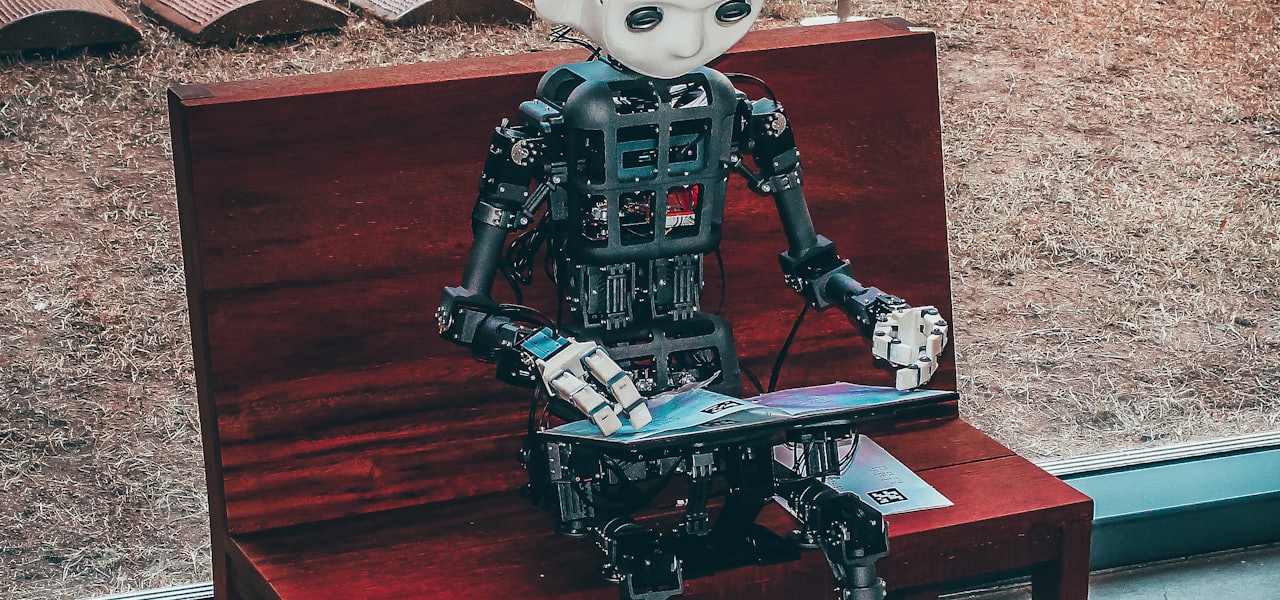
The controversies surrounding artificial intelligence encompass a broad range of public, academic, and political debates regarding the societal effects of artificial intelligence (AI). These debates intensified particularly in the late 2010s and 2020s, coinciding with an accelerated period of development known as the AI boom. While advocates emphasize the technology's potential to solve complex problems and enhance human quality of life, detractors highlight a wide array of dangers and challenges. These include concerns over ethics, plagiarism and theft, fraud, safety and alignment, environmental impacts, technological unemployment, and the spread of misinformation. It also covers severe future or theoretical challenges, such as the emergence of artificial superintelligence and existential risks. == 2016 == === Microsoft Tay chatbot (2016) === On March 23, 2016, Microsoft released Tay, a chatbot designed to mimic the language patterns of a 19-year-old American girl and learn from interactions with Twitter users. Soon after its launch, Tay began posting racist, sexist, and otherwise inflammatory tweets after Twitter users deliberately taught it offensive phrases and exploited its "repeat after me" capability. Examples of controversial outputs included Holocaust denial and calls for genocide using racial slurs. Within 16 hours of its release, Microsoft suspended the Twitter account, deleted the offensive tweets, and stated that Tay had suffered from a "coordinated attack by a subset of people" that "exploited a vulnerability." Tay was briefly and accidentally re-released on March 30 during testing, after which it was permanently shut down. Microsoft CEO Satya Nadella later stated that Tay "has had a great influence on how Microsoft is approaching AI" and taught the company the importance of taking accountability. == 2022 == === Voiceverse NFT plagiarism scandal (2022) === On January 14, 2022, voice actor Troy Baker announced a partnership with Voiceverse, a blockchain-based company that marketed proprietary AI voice cloning technology as non-fungible tokens (NFT), triggering immediate backlash over environmental concerns, fears that AI could displace human voice actors, and concerns about fraud. Later that same day, the pseudonymous creator of 15.ai—a free, non-commercial AI voice synthesis research project—revealed through server logs that Voiceverse had used 15.ai to generate voice samples, pitch-shifted them to make them unrecognizable, and falsely marketed them as their own proprietary technology before selling them as NFTs; the developer of 15.ai had previously stated that they had no interest in incorporating NFTs into their work. Voiceverse confessed within an hour and stated that their marketing team had used 15.ai without attribution while rushing to create a demo. News publications and AI watchdog groups universally characterized the incident as theft stemming from generative artificial intelligence. === Théâtre D'opéra Spatial (2022) === On August 29, 2022, Jason Michael Allen won first place in the "emerging artist" (non-professional) division of the "Digital Arts/Digitally-Manipulated Photography" category of the Colorado State Fair's fine arts competition with Théâtre D'opéra Spatial, a digital artwork created using the AI image generator Midjourney, Adobe Photoshop, and AI upscaling tools, becoming one of the first images made using generative AI to win such a prize. Allen disclosed his use of Midjourney when submitting, though the judges did not know it was an AI tool but stated they would have awarded him first place regardless. While there was little contention about the image at the fair, reactions to the win on social media were negative. On September 5, 2023, the United States Copyright Office ruled that the work was not eligible for copyright protection as the human creative input was de minimis and that copyright rules "exclude works produced by non-humans." == 2023 == === Statements on AI risk (2023) === On March 22, 2023, the Future of Life Institute published an open letter calling on "all AI labs to immediately pause for at least 6 months the training of AI systems more powerful than GPT-4", citing risks such as AI-generated propaganda, extreme automation of jobs, human obsolescence, and a society-wide loss of control. The letter, published a week after the release of OpenAI's GPT-4, asserted that current large language models were "becoming human-competitive at general tasks". It received more than 30,000 signatures, including academic AI researchers and industry CEOs such as Yoshua Bengio, Stuart Russell, Elon Musk, Steve Wozniak and Yuval Noah Harari. The letter was criticized for diverting attention from more immediate societal risks such as algorithmic biases, with Timnit Gebru and others arguing that it amplified "some futuristic, dystopian sci-fi scenario" instead of current problems with AI. On May 30, 2023, the Center for AI Safety released a one-sentence statement signed by hundreds of artificial intelligence experts and other notable figures: "Mitigating the risk of extinction from AI should be a global priority alongside other societal-scale risks such as pandemics and nuclear war." Signatories included Turing laureates Geoffrey Hinton and Yoshua Bengio, as well as the scientific and executive leaders of several major AI companies, including Sam Altman, Demis Hassabis, and Bill Gates. The statement prompted responses from political leaders, including UK Prime Minister Rishi Sunak, who retweeted it with a statement that the UK government would look carefully into it, and White House Press Secretary Karine Jean-Pierre, who commented that AI "is one of the most powerful technologies that we see currently in our time." Skeptics, including from Human Rights Watch, argued that scientists should focus on known risks of AI instead of speculative future risks. === Removal of Sam Altman from OpenAI (2023) === On November 17, 2023, OpenAI's board of directors ousted co-founder and chief executive Sam Altman, stating that "the board no longer has confidence in his ability to continue leading OpenAI." The removal was precipitated by employee concerns about his handling of artificial intelligence safety and allegations of abusive behavior. Altman was reinstated on November 22 after pressure from employees and investors, including a letter signed by 745 of OpenAI's 770 employees threatening mass resignations if the board did not resign. The removal and subsequent reinstatement caused widespread reactions, including Microsoft's stock falling nearly three percent following the initial announcement and then rising over two percent to an all-time high after Altman was hired to lead a Microsoft AI research team before his reinstatement. The incident also prompted investigations from the Competition and Markets Authority and the Federal Trade Commission into Microsoft's relationship with OpenAI. == 2024 == === Taylor Swift deepfake pornography controversy (2024) === In late January 2024, sexually explicit AI-generated deepfake images of Taylor Swift were proliferated on X, with one post reported to have been seen over 47 million times before its removal. Disinformation research firm Graphika traced the images back to 4chan, while members of a Telegram group had discussed ways to circumvent censorship safeguards of AI image generators to create pornographic images of celebrities. The images prompted responses from anti-sexual assault advocacy groups, US politicians, and Swifties. Microsoft CEO Satya Nadella called the incident "alarming and terrible." X briefly blocked searches of Swift's name on January 27, 2024, and Microsoft enhanced its text-to-image model safeguards to prevent future abuse. On January 30, US senators Dick Durbin, Lindsey Graham, Amy Klobuchar, and Josh Hawley introduced a bipartisan bill that would allow victims to sue individuals who produced or possessed "digital forgeries" with intent to distribute, or those who received the material knowing it was made without consent. === Google Gemini image generation controversy (2024) === In February 2024, social media users reported that Google's Gemini chatbot was generating images that featured people of color and women in historically inaccurate contexts—such as Vikings, Nazi soldiers, and the Founding Fathers—and refusing prompts to generate images of white people. The images were derided on social media, including by conservatives who cited them as evidence of Google's "wokeness", and criticized by Elon Musk, who denounced Google's products as biased and racist. In response, Google paused Gemini's ability to generate images of people. Google executive Prabhakar Raghavan released a statement explaining that Gemini had "overcompensate[d]" in its efforts to strive for diversity and acknowledging that the images were "embarrassing and wrong". Google CEO Sundar Pichai called the incident offensive and unacceptable in an internal memo, promising struc
Document-oriented database
A document-oriented database, or document store, is a computer program and data storage system designed for storing, retrieving, and managing document-oriented information, also known as semi-structured data. Document-oriented databases are one of the main categories of NoSQL databases, and the popularity of the term "document-oriented database" has grown alongside the adoption of NoSQL itself. XML databases are a subclass of document-oriented databases optimized for XML documents. Graph databases are similar, but add another layer, the relationship, which allows them to link documents for rapid traversal. Document-oriented databases are conceptually an extension of the key–value store, another type of NoSQL database. In key-value stores, data is treated as opaque by the database, whereas document-oriented systems exploit the internal structure of documents to extract metadata and optimize storage and queries. Although in practice the distinction can be minimal due to modern tooling, document stores are designed to provide a richer programming experience with modern programming techniques. Document databases differ significantly from traditional relational databases (RDBs). Relational databases store data in predefined tables, often requiring an object to be split across multiple tables. In contrast, document databases store all information for a given object in a single document, with each document potentially having a unique structure. This design eliminates the need for object-relational mapping when loading data into the database. == Documents == The central concept of a document-oriented database is the notion of a document. Although implementations vary in their specific definitions, document-oriented databases generally treat documents as self-contained units that encapsulate and encode data in a standardized format. Common encoding formats include XML, YAML, JSON, as well as binary representations such as BSON. Documents in a document store are equivalent to the programming concept of an object. They are not required to adhere to a fixed schema, and documents within the same collection may contain different fields or structures. Fields may be optional, and documents of the same logical type may differ in composition. For example, the following illustrates a document encoded in JSON: A second document might be encoded in XML as: The two example documents share some structural elements but also contain unique fields. The structure, text, and other data within each document are collectively referred to as the document's content and can be accessed or modified using retrieval or editing operations. Unlike relational databases, in which each record contains the same fields and unused fields are left empty, document-oriented databases do not require uniform fields across documents. This design allows new information to be added to some documents without affecting the structure of others. Document databases often support the storage of additional metadata alongside the document content. Such metadata may relate to organizational features, security, indexing, or other implementation-specific features. === CRUD operations === The core operations supported by a document-oriented database for manipulating documents are similar to those in other databases. Although terminology is not perfectly standardized, these operations are generally recognized as Create, Read, Update, and Delete (CRUD). Creation (C): Adds a new document to the database. Retrieval (R): Retrieves documents or fields based on queries. Update (U): Modifies the contents of existing documents. Deletion (D): Removes documents from the database. === Keys === Documents in a document-oriented database are addressed via a unique identifier. This identifier, often a string, URI, or path, can be used to retrieve the document from the database. Most document stores maintain an index on the key to optimize retrieval, and in some implementations the key is required when creating or inserting a new document. === Retrieval === In addition to key-based access, document-oriented databases typically provide an API or query language that enables retrieval based on document content or associated metadata. For example, a query may return all documents with a specific field matching a given value. The available query features, indexing options, and performance characteristics vary across implementations. Document stores differ from key-value stores in that they exploit the internal structure and metadata of stored documents. In many key-value stores, values are treated as opaque or "black-box" data, meaning the database system does not interpret their internal structure. By contrast, document-oriented databases can classify and interpret document content. This enables queries that distinguish between types of data––for example, retrieving all phone numbers containing "555" without also matching a postal code such as "55555." === Editing === Document databases typically provide mechanisms for updating or editing the content or metadata of a document. Updates may involve replacing the entire document or modifying individual elements or fields within the document. === Organization === Document database implementations support a variety of methods for organizing documents, including: Collections: Groups of documents. Depending on the implementation, a document may be required to belong to a single collection or may be allowed in multiple collections. Tags and non-visible metadata: Additional data stored outside the main document content. Directory hierarchies: Documents organized in a tree-like structure, often based on path or URI. These organizational structures may differ between logical and physical representations (e.g. on disk or in memory). == Relationship to other databases == === Relationship to key-value stores === A document-oriented database can be viewed as a specialized form of key-value store, which is itself a category of NoSQL database. In a basic key-value store, the stored value is typically treated as opaque by the database system. By contrast, a document-oriented database provides APIs or a query and update language that allows queries and modifications based on the internal structure of the document. For users who do not require advanced query, retrieval, or update capabilities, the distinction between document-oriented databases and key-value stores may be minimal. === Relationship to search engines === Some search engine and information retrieval systems, such as Apache Solr and Elasticsearch, provide document storage and support core document operations. As a result, they may meet certain functional definitions of a document-oriented database, although their primary design goals differ. === Relationship to relational databases === In a relational database, data is organized into predefined types represented as tables. Each table contains rows (records) with a fixed set of columns (fields), so all records in a table share the same structure. Administrators typically define indexes on selected fields to improve query performance. A central principle of relational database design is database normalization, in which data that might otherwise be repeated is stored in separate tables and linked using keys. When records in different tables are related, a foreign key is used to associate them. For example, an address book application may store a contact's name, image, phone numbers, mailing addresses, and email addresses. In a normalized relational design, separate tables might be created for contacts, phone numbers, and email addresses. The phone number table would include a foreign key referencing the associated contact. To reconstruct a complete contact record, the database retrieves related information from each table using the foreign keys and combines it into a single record. In contrast, a document-oriented database stores all data related to an object within a single document, and stored in the database as a single entry. In the address book example,the contact's name, image, and contact information may be stored together in one document. The document is retrieved using a unique key, and all related information is returned together, without needing to look up multiple tables. A key difference between the document-oriented and relational models is that the data formats are not predefined in the document case. In most cases, any sort of document can be stored in a database, and documents can change in type and form over time. For example, a new field such as COUNTRY_FLAG can be added to new documents as they are inserted without affecting existing documents. To aid retrieval, document-oriented systems generally allow the administrator to provide hints to the database for locating certain types of information. These hints work in a similar fashion to indexes in relational databases. Many systems also allow additional metadata outside the content of the document itself
Cross-entropy
In information theory, the cross-entropy between two probability distributions p {\displaystyle p} and q {\displaystyle q} , over the same underlying set of events, measures the average number of bits needed to identify an event drawn from the set when the coding scheme used for the set is optimized for an estimated probability distribution q {\displaystyle q} , rather than the true distribution p {\displaystyle p} . == Definition == The cross-entropy of the distribution q {\displaystyle q} relative to a distribution p {\displaystyle p} over a given set is defined as follows: H ( p , q ) = − E p [ log q ] , {\displaystyle H(p,q)=-\operatorname {E} _{p}[\log q],} where E p [ ⋅ ] {\displaystyle \operatorname {E} _{p}[\cdot ]} is the expected value operator with respect to the distribution p {\displaystyle p} . The definition may be formulated using the Kullback–Leibler divergence D K L ( p ∥ q ) {\displaystyle D_{\mathrm {KL} }(p\parallel q)} , divergence of p {\displaystyle p} from q {\displaystyle q} (also known as the relative entropy of p {\displaystyle p} with respect to q {\displaystyle q} ). H ( p , q ) = H ( p ) + D K L ( p ∥ q ) , {\displaystyle H(p,q)=H(p)+D_{\mathrm {KL} }(p\parallel q),} where H ( p ) {\displaystyle H(p)} is the entropy of p {\displaystyle p} . For discrete probability distributions p {\displaystyle p} and q {\displaystyle q} with the same support X {\displaystyle {\mathcal {X}}} , this means The situation for continuous distributions is analogous. We have to assume that p {\displaystyle p} and q {\displaystyle q} are absolutely continuous with respect to some reference measure r {\displaystyle r} (usually r {\displaystyle r} is a Lebesgue measure on a Borel σ-algebra). Let P {\displaystyle P} and Q {\displaystyle Q} be probability density functions of p {\displaystyle p} and q {\displaystyle q} with respect to r {\displaystyle r} . Then − ∫ X P ( x ) log Q ( x ) d x = E p [ − log Q ] , {\displaystyle -\int _{\mathcal {X}}P(x)\,\log Q(x)\,\mathrm {d} x=\operatorname {E} _{p}[-\log Q],} and therefore NB: The notation H ( p , q ) {\displaystyle H(p,q)} is also used for a different concept, the joint entropy of p {\displaystyle p} and q {\displaystyle q} . == Motivation == In information theory, the Kraft–McMillan theorem establishes that any directly decodable coding scheme for coding a message to identify one value x i {\displaystyle x_{i}} out of a set of possibilities { x 1 , … , x n } {\displaystyle \{x_{1},\ldots ,x_{n}\}} can be seen as representing an implicit probability distribution q ( x i ) = ( 1 2 ) ℓ i {\displaystyle q(x_{i})=\left({\frac {1}{2}}\right)^{\ell _{i}}} over { x 1 , … , x n } {\displaystyle \{x_{1},\ldots ,x_{n}\}} , where ℓ i {\displaystyle \ell _{i}} is the length of the code for x i {\displaystyle x_{i}} in bits. Therefore, cross-entropy can be interpreted as the expected message-length per datum when a wrong distribution q {\displaystyle q} is assumed while the data actually follows a distribution p {\displaystyle p} . That is why the expectation is taken over the true probability distribution p {\displaystyle p} and not q . {\displaystyle q.} Indeed the expected message-length under the true distribution p {\displaystyle p} is E p [ ℓ ] = − E p [ ln q ( x ) ln ( 2 ) ] = − E p [ log 2 q ( x ) ] = − ∑ x i p ( x i ) log 2 q ( x i ) = − ∑ x p ( x ) log 2 q ( x ) = H ( p , q ) . {\displaystyle {\begin{aligned}\operatorname {E} _{p}[\ell ]&=-\operatorname {E} _{p}\left[{\frac {\ln {q(x)}}{\ln(2)}}\right]\\[1ex]&=-\operatorname {E} _{p}\left[\log _{2}{q(x)}\right]\\[1ex]&=-\sum _{x_{i}}p(x_{i})\,\log _{2}q(x_{i})\\[1ex]&=-\sum _{x}p(x)\,\log _{2}q(x)=H(p,q).\end{aligned}}} == Estimation == There are many situations where cross-entropy needs to be measured but the distribution of p {\displaystyle p} is unknown. An example is language modeling, where a model is created based on a training set T {\displaystyle T} , and then its cross-entropy is measured on a test set to assess how accurate the model is in predicting the test data. In this example, p {\displaystyle p} is the true distribution of words in any corpus, and q {\displaystyle q} is the distribution of words as predicted by the model. Since the true distribution is unknown, cross-entropy cannot be directly calculated. In these cases, an estimate of cross-entropy is calculated using the following formula: H ( T , q ) = − ∑ i = 1 N 1 N log 2 q ( x i ) {\displaystyle H(T,q)=-\sum _{i=1}^{N}{\frac {1}{N}}\log _{2}q(x_{i})} where N {\displaystyle N} is the size of the test set, and q ( x ) {\displaystyle q(x)} is the probability of event x {\displaystyle x} estimated from the training set. In other words, q ( x i ) {\displaystyle q(x_{i})} is the probability estimate of the model that the i-th word of the text is x i {\displaystyle x_{i}} . The sum is averaged over the N {\displaystyle N} words of the test. This is a Monte Carlo estimate of the true cross-entropy, where the test set is treated as samples from p ( x ) {\displaystyle p(x)} . == Relation to maximum likelihood == The cross entropy arises in classification problems when introducing a logarithm in the guise of the log-likelihood function. This section concerns the estimation of the probabilities of different discrete outcomes. To this end, denote a parametrized family of distributions by q θ {\displaystyle q_{\theta }} , with θ {\displaystyle \theta } subject to the optimization effort. Consider a given finite sequence of N {\displaystyle N} values x i {\displaystyle x_{i}} from a training set, obtained from conditionally independent sampling. The likelihood assigned to any considered parameter θ {\displaystyle \theta } of the model is then given by the product over all probabilities q θ ( X = x i ) {\displaystyle q_{\theta }(X=x_{i})} . Repeated occurrences are possible, leading to equal factors in the product. If the count of occurrences of the value equal to x {\displaystyle x} is denoted by # x {\displaystyle \#x} , then the frequency of that value equals # x / N {\displaystyle \#x/N} . If p ( X = x ) {\displaystyle p(X=x)} is the underlying probability distribution, for large N {\displaystyle N} we expect p ( X = x ) ≈ # x / N {\displaystyle p(X=x)\approx \#x/N} , by the law of large numbers. Writing our likelihood function as the product of observations from the distribution q θ {\displaystyle q_{\theta }} : L ( θ ; x ) = ∏ i q θ ( X = x i ) = ∏ x q θ ( X = x ) # x ≈ ∏ x q θ ( X = x ) N ⋅ p ( X = x ) = exp log [ ∏ x q θ ( X = x ) N ⋅ p ( X = x ) ] = exp ( ∑ x N ⋅ p ( X = x ) log q θ ( X = x ) ) , {\displaystyle {\begin{aligned}{\mathcal {L}}(\theta ;{\mathbf {x} })&=\prod _{i}q_{\theta }(X=x_{i})=\prod _{x}q_{\theta }(X=x)^{\#x}\\&\approx \prod _{x}q_{\theta }(X=x)^{N\cdot p(X=x)}=\exp \log \left[\prod _{x}q_{\theta }(X=x)^{N\cdot p(X=x)}\right]\\&=\exp \left(\sum _{x}N\cdot p(X=x)\log q_{\theta }(X=x)^{}\right),\end{aligned}}} where we have used the calculation rules for the logarithm in the final line. Notice how the exponent contains a − H ( p , q θ ) {\displaystyle -H(p,q_{\theta })} term. Taking the logarithm of both sides gives: log L ( θ ; x ) = − N ⋅ H ( p , q θ ) . {\displaystyle \log {\mathcal {L}}(\theta ;{\mathbf {x} })=-N\cdot H(p,q_{\theta }).} Since the logarithm is a monotonically increasing function, the maximizing value of θ {\displaystyle \theta } is unaffected by this final step. Similarly, the maximizing value of θ {\displaystyle \theta } is unaffected by the factor of N {\displaystyle N} . So we observe that the likelihood maximization amounts to minimization of the cross-entropy. == Cross-entropy minimization == Cross-entropy minimization is frequently used in optimization and rare-event probability estimation. When comparing a distribution q {\displaystyle q} against a fixed reference distribution p {\displaystyle p} , cross-entropy and KL divergence are identical up to an additive constant (since p {\displaystyle p} is fixed): According to the Gibbs' inequality, both take on their minimal values when p = q {\displaystyle p=q} , which is 0 {\displaystyle 0} for KL divergence, and H ( p ) {\displaystyle \mathrm {H} (p)} for cross-entropy. In the engineering literature, the principle of minimizing KL divergence (Kullback's "Principle of Minimum Discrimination Information") is often called the Principle of Minimum Cross-Entropy (MCE), or Minxent. However, as discussed in the article Kullback–Leibler divergence, sometimes the distribution q {\displaystyle q} is the fixed prior reference distribution, and the distribution p {\displaystyle p} is optimized to be as close to q {\displaystyle q} as possible, subject to some constraint. In this case the two minimizations are not equivalent. This has led to some ambiguity in the literature, with some authors attempting to resolve the inconsistency by restating cross-entropy to be D K L ( p ∥ q ) {\displaystyle D_{\mathrm {KL} }(p\parallel q)} , rather than H (
Large margin nearest neighbor
Large margin nearest neighbor (LMNN) classification is a statistical machine learning algorithm for metric learning. It learns a pseudometric designed for k-nearest neighbor classification. The algorithm is based on semidefinite programming, a sub-class of convex optimization. The goal of supervised learning (more specifically classification) is to learn a decision rule that can categorize data instances into pre-defined classes. The k-nearest neighbor rule assumes a training data set of labeled instances (i.e. the classes are known). It classifies a new data instance with the class obtained from the majority vote of the k closest (labeled) training instances. Closeness is measured with a pre-defined metric. Large margin nearest neighbors is an algorithm that learns this global (pseudo-)metric in a supervised fashion to improve the classification accuracy of the k-nearest neighbor rule. == Setup == The main intuition behind LMNN is to learn a pseudometric under which all data instances in the training set are surrounded by at least k instances that share the same class label. If this is achieved, the leave-one-out error (a special case of cross validation) is minimized. Let the training data consist of a data set D = { ( x → 1 , y 1 ) , … , ( x → n , y n ) } ⊂ R d × C {\displaystyle D=\{({\vec {x}}_{1},y_{1}),\dots ,({\vec {x}}_{n},y_{n})\}\subset R^{d}\times C} , where the set of possible class categories is C = { 1 , … , c } {\displaystyle C=\{1,\dots ,c\}} . The algorithm learns a pseudometric of the type d ( x → i , x → j ) = ( x → i − x → j ) ⊤ M ( x → i − x → j ) {\displaystyle d({\vec {x}}_{i},{\vec {x}}_{j})=({\vec {x}}_{i}-{\vec {x}}_{j})^{\top }\mathbf {M} ({\vec {x}}_{i}-{\vec {x}}_{j})} . For d ( ⋅ , ⋅ ) {\displaystyle d(\cdot ,\cdot )} to be well defined, the matrix M {\displaystyle \mathbf {M} } needs to be positive semi-definite. The Euclidean metric is a special case, where M {\displaystyle \mathbf {M} } is the identity matrix. This generalization is often (falsely) referred to as Mahalanobis metric. Figure 1 illustrates the effect of the metric under varying M {\displaystyle \mathbf {M} } . The two circles show the set of points with equal distance to the center x → i {\displaystyle {\vec {x}}_{i}} . In the Euclidean case this set is a circle, whereas under the modified (Mahalanobis) metric it becomes an ellipsoid. The algorithm distinguishes between two types of special data points: target neighbors and impostors. === Target neighbors === Target neighbors are selected before learning. Each instance x → i {\displaystyle {\vec {x}}_{i}} has exactly k {\displaystyle k} different target neighbors within D {\displaystyle D} , which all share the same class label y i {\displaystyle y_{i}} . The target neighbors are the data points that should become nearest neighbors under the learned metric. Let us denote the set of target neighbors for a data point x → i {\displaystyle {\vec {x}}_{i}} as N i {\displaystyle N_{i}} . === Impostors === An impostor of a data point x → i {\displaystyle {\vec {x}}_{i}} is another data point x → j {\displaystyle {\vec {x}}_{j}} with a different class label (i.e. y i ≠ y j {\displaystyle y_{i}\neq y_{j}} ) which is one of the nearest neighbors of x → i {\displaystyle {\vec {x}}_{i}} . During learning the algorithm tries to minimize the number of impostors for all data instances in the training set. == Algorithm == Large margin nearest neighbors optimizes the matrix M {\displaystyle \mathbf {M} } with the help of semidefinite programming. The objective is twofold: For every data point x → i {\displaystyle {\vec {x}}_{i}} , the target neighbors should be close and the impostors should be far away. Figure 1 shows the effect of such an optimization on an illustrative example. The learned metric causes the input vector x → i {\displaystyle {\vec {x}}_{i}} to be surrounded by training instances of the same class. If it was a test point, it would be classified correctly under the k = 3 {\displaystyle k=3} nearest neighbor rule. The first optimization goal is achieved by minimizing the average distance between instances and their target neighbors ∑ i , j ∈ N i d ( x → i , x → j ) {\displaystyle \sum _{i,j\in N_{i}}d({\vec {x}}_{i},{\vec {x}}_{j})} . The second goal is achieved by penalizing distances to impostors x → l {\displaystyle {\vec {x}}_{l}} that are less than one unit further away than target neighbors x → j {\displaystyle {\vec {x}}_{j}} (and therefore pushing them out of the local neighborhood of x → i {\displaystyle {\vec {x}}_{i}} ). The resulting value to be minimized can be stated as: ∑ i , j ∈ N i , l , y l ≠ y i [ d ( x → i , x → j ) + 1 − d ( x → i , x → l ) ] + {\displaystyle \sum _{i,j\in N_{i},l,y_{l}\neq y_{i}}[d({\vec {x}}_{i},{\vec {x}}_{j})+1-d({\vec {x}}_{i},{\vec {x}}_{l})]_{+}} With a hinge loss function [ ⋅ ] + = max ( ⋅ , 0 ) {\textstyle [\cdot ]_{+}=\max(\cdot ,0)} , which ensures that impostor proximity is not penalized when outside the margin. The margin of exactly one unit fixes the scale of the matrix M {\displaystyle M} . Any alternative choice c > 0 {\displaystyle c>0} would result in a rescaling of M {\displaystyle M} by a factor of 1 / c {\displaystyle 1/c} . The final optimization problem becomes: min M ∑ i , j ∈ N i d ( x → i , x → j ) + λ ∑ i , j , l ξ i j l {\displaystyle \min _{\mathbf {M} }\sum _{i,j\in N_{i}}d({\vec {x}}_{i},{\vec {x}}_{j})+\lambda \sum _{i,j,l}\xi _{ijl}} ∀ i , j ∈ N i , l , y l ≠ y i {\displaystyle \forall _{i,j\in N_{i},l,y_{l}\neq y_{i}}} d ( x → i , x → j ) + 1 − d ( x → i , x → l ) ≤ ξ i j l {\displaystyle d({\vec {x}}_{i},{\vec {x}}_{j})+1-d({\vec {x}}_{i},{\vec {x}}_{l})\leq \xi _{ijl}} ξ i j l ≥ 0 {\displaystyle \xi _{ijl}\geq 0} M ⪰ 0 {\displaystyle \mathbf {M} \succeq 0} The hyperparameter λ > 0 {\textstyle \lambda >0} is some positive constant (typically set through cross-validation). Here the variables ξ i j l {\displaystyle \xi _{ijl}} (together with two types of constraints) replace the term in the cost function. They play a role similar to slack variables to absorb the extent of violations of the impostor constraints. The last constraint ensures that M {\displaystyle \mathbf {M} } is positive semi-definite. The optimization problem is an instance of semidefinite programming (SDP). Although SDPs tend to suffer from high computational complexity, this particular SDP instance can be solved very efficiently due to the underlying geometric properties of the problem. In particular, most impostor constraints are naturally satisfied and do not need to be enforced during runtime (i.e. the set of variables ξ i j l {\displaystyle \xi _{ijl}} is sparse). A particularly well suited solver technique is the working set method, which keeps a small set of constraints that are actively enforced and monitors the remaining (likely satisfied) constraints only occasionally to ensure correctness. == Extensions and efficient solvers == LMNN was extended to multiple local metrics in the 2008 paper. This extension significantly improves the classification error, but involves a more expensive optimization problem. In their 2009 publication in the Journal of Machine Learning Research, Weinberger and Saul derive an efficient solver for the semi-definite program. It can learn a metric for the MNIST handwritten digit data set in several hours, involving billions of pairwise constraints. An open source Matlab implementation is freely available at the authors web page. Kumal et al. extended the algorithm to incorporate local invariances to multivariate polynomial transformations and improved regularization.
Boosting (machine learning)
In machine learning (ML), boosting is an ensemble learning method that combines a set of less accurate models (called "weak learners") to create a single, highly accurate model (a "strong learner"). Unlike other ensemble methods that build models in parallel (such as bagging), boosting algorithms build models sequentially. Each new model in the sequence is trained to correct the errors made by its predecessors. This iterative process allows the overall model to improve its accuracy, particularly by reducing bias. Boosting is a popular and effective technique used in supervised learning for both classification and regression tasks. The theoretical foundation for boosting came from a question posed by Kearns and Valiant (1988, 1989): "Can a set of weak learners create a single strong learner?" A weak learner is defined as a classifier that performs only slightly better than random guessing, whereas a strong learner is a classifier that is highly correlated with the true classification. Robert Schapire's affirmative answer to this question in a 1990 paper led to the development of practical boosting algorithms. The first such algorithm was developed by Schapire, with Freund and Schapire later developing AdaBoost, which remains a foundational example of boosting. == Algorithms == While boosting is not algorithmically constrained, most boosting algorithms consist of iteratively learning weak classifiers with respect to a distribution and adding them to a final strong classifier. When they are added, they are weighted in a way that is related to the weak learners' accuracy. After a weak learner is added, the data weights are readjusted, known as "re-weighting". Misclassified input data gain a higher weight and examples that are classified correctly lose weight. Thus, future weak learners focus more on the examples that previous weak learners misclassified. There are many boosting algorithms. The original ones, proposed by Robert Schapire (a recursive majority gate formulation), and Yoav Freund (boost by majority), were not adaptive and could not take full advantage of the weak learners. Schapire and Freund then developed AdaBoost, an adaptive boosting algorithm that won the prestigious Gödel Prize. Only algorithms that are provable boosting algorithms in the probably approximately correct learning formulation can accurately be called boosting algorithms. Other algorithms that are similar in spirit to boosting algorithms are sometimes called "leveraging algorithms", although they are also sometimes incorrectly called boosting algorithms. The main variation between many boosting algorithms is their method of weighting training data points and hypotheses. AdaBoost is very popular and the most significant historically as it was the first algorithm that could adapt to the weak learners. It is often the basis of introductory coverage of boosting in university machine learning courses. There are many more recent algorithms such as LPBoost, TotalBoost, BrownBoost, xgboost, MadaBoost, LogitBoost, CatBoost and others. Many boosting algorithms fit into the AnyBoost framework, which shows that boosting performs gradient descent in a function space using a convex cost function. == Object categorization in computer vision == Given images containing various known objects in the world, a classifier can be learned from them to automatically classify the objects in future images. Simple classifiers built based on some image feature of the object tend to be weak in categorization performance. Using boosting methods for object categorization is a way to unify the weak classifiers in a special way to boost the overall ability of categorization. === Problem of object categorization === Object categorization is a typical task of computer vision that involves determining whether or not an image contains some specific category of object. The idea is closely related with recognition, identification, and detection. Appearance based object categorization typically contains feature extraction, learning a classifier, and applying the classifier to new examples. There are many ways to represent a category of objects, e.g. from shape analysis, bag of words models, or local descriptors such as SIFT, etc. Examples of supervised classifiers are Naive Bayes classifiers, support vector machines, mixtures of Gaussians, and neural networks. However, research has shown that object categories and their locations in images can be discovered in an unsupervised manner as well. === Status quo for object categorization === The recognition of object categories in images is a challenging problem in computer vision, especially when the number of categories is large. This is due to high intra class variability and the need for generalization across variations of objects within the same category. Objects within one category may look quite different. Even the same object may appear unalike under different viewpoint, scale, and illumination. Background clutter and partial occlusion add difficulties to recognition as well. Humans are able to recognize thousands of object types, whereas most of the existing object recognition systems are trained to recognize only a few, e.g. human faces, cars, simple objects, etc. Research has been very active on dealing with more categories and enabling incremental additions of new categories, and although the general problem remains unsolved, several multi-category objects detectors (for up to hundreds or thousands of categories) have been developed. One means is by feature sharing and boosting. === Boosting for binary categorization === AdaBoost can be used for face detection as an example of binary categorization. The two categories are faces versus background. The general algorithm is as follows: Form a large set of simple features Initialize weights for training images For T rounds Normalize the weights For available features from the set, train a classifier using a single feature and evaluate the training error Choose the classifier with the lowest error Update the weights of the training images: increase if classified wrongly by this classifier, decrease if correctly Form the final strong classifier as the linear combination of the T classifiers (coefficient larger if training error is small) After boosting, a classifier constructed from 200 features could yield a 95% detection rate under a 10 − 5 {\displaystyle 10^{-5}} false positive rate. Another application of boosting for binary categorization is a system that detects pedestrians using patterns of motion and appearance. This work is the first to combine both motion information and appearance information as features to detect a walking person. It takes a similar approach to the Viola-Jones object detection framework. === Boosting for multi-class categorization === Compared with binary categorization, multi-class categorization looks for common features that can be shared across the categories at the same time. They turn to be more generic edge like features. During learning, the detectors for each category can be trained jointly. Compared with training separately, it generalizes better, needs less training data, and requires fewer features to achieve the same performance. The main flow of the algorithm is similar to the binary case. What is different is that a measure of the joint training error shall be defined in advance. During each iteration the algorithm chooses a classifier of a single feature (features that can be shared by more categories shall be encouraged). This can be done via converting multi-class classification into a binary one (a set of categories versus the rest), or by introducing a penalty error from the categories that do not have the feature of the classifier. In the paper "Sharing visual features for multiclass and multiview object detection", A. Torralba et al. used GentleBoost for boosting and showed that when training data is limited, learning via sharing features does a much better job than no sharing, given same boosting rounds. Also, for a given performance level, the total number of features required (and therefore the run time cost of the classifier) for the feature sharing detectors, is observed to scale approximately logarithmically with the number of class, i.e., slower than linear growth in the non-sharing case. Similar results are shown in the paper "Incremental learning of object detectors using a visual shape alphabet", yet the authors used AdaBoost for boosting. == Convex vs. non-convex boosting algorithms == Boosting algorithms can be based on convex or non-convex optimization algorithms. Convex algorithms, such as AdaBoost and LogitBoost, can be "defeated" by random noise such that they can't learn basic and learnable combinations of weak hypotheses. This limitation was pointed out by Long & Servedio in 2008. However, by 2009, multiple authors demonstrated that boosting algorithms based on non-convex optimization, such as BrownBoost, can learn from nois
Semi-automation
Semi-automation is a process or procedure that is performed by the combined activities of man and machine with both human and machine steps typically orchestrated by a centralized computer controller. Within manufacturing, production processes may be fully manual, semi-automated, or fully automated. In this case, semi-automation may vary in its degree of manual and automated steps. Semi-automated manufacturing processes are typically orchestrated by a computer controller which sends messages to the worker at the time in which he/she should perform a step. The controller typically waits for feedback that the human performed step has been completed via either a human-machine interface or via electronic sensors distributed within the process. Controllers within semi-automated processes may either directly control machinery or send signals to machinery distributed within the process. Centralized computer controllers within semi-automated processes orchestrate processes by instructing the worker, providing electronic communication and control to process equipment, tools, or machines, as well as perform data management to record and ensure that the process meets established process criteria. Many manufacturers choose not to fully automate a process, and instead implement semi-automation due to the complexity of the task, or the number of products produced is too low to justify the investment in full automation. Other processes may not be fully automated because it may reduce the flexibility to easily adapt the processes to reflect production needs.
Evolutionary attractor
An evolutionary attractor is a point in an evolutionary space where a selection process will always drive trait values towards that point from the region around it. Because of the importance of evolution through natural selection, often such an evolutionary space will be defined by genetic or phenotypic traits, or possibly both. In this case the selection process will be a form of natural selection. The existence of an evolutionary attractor in a biological evolutionary space does not always imply that it can be reached from all points in that evolutionary space, nor does it identify what will happen when the evolutionary attractor is reached. While an evolutionary attractor may represent a point in evolutionary space that is resistant to further selection, such as an evolutionarily stable strategy, other possibilities are available. Because identification of an evolutionary attractor on its own does not describe everything about the evolutionary space in which it lies, this has led to interest in the evolutionary dynamics surrounding evolutionary attractors and in evolutionary spaces in general. (Theoretical biologists and mathematicians working in the area may prefer the terms adaptive dynamics or evolutionary invasion analysis to evolutionary dynamics.) These fields use differential equations which allows a more complete understanding of the dynamics in evolutionary spaces including the existence or otherwise of evolutionary attractors. Advances in the study of molecular evolution have also led to the identification of evolutionary attractors at a molecular level. Because biological evolutionary processes have been studied using evolutionary game theory, a technique inspired by game theory originally derived to address economic problems, not only can evolutionary attractors be found in biology but economists studying evolutionary economic models have also identified evolutionary attractors. Evolution in biology has also inspired evolutionary computation in computer science. Many algorithms in this field use a form of selection inspired by natural selection to generate results through evolutionary algorithms. This is therefore another area in which evolutionary attractors have been identified. == Evolutionary attractors in biology == It is not probably not surprising that biology is the field where most examples of evolutionary attractors have been identified, given the importance of evolution through natural selection. === Evolutionary attractors in adaptive landscapes === An evolutionary attractor is a point in genetic and/or phenotypic trait space, that evolution will always drive trait values towards via a selection process. The concept of an evolutionary attractor arose in population genetics following the origin of the adaptive landscape originally proposed by Sewall Wright in 1932. The height of a point in an adaptive landscape is a measure of evolutionary fitness. If a point in an adaptive landscape is a peak, then selection will always drive traits towards it and it will be an evolutionary attractor. While population genetics deals with discrete genetic traits, quantitative genetics extended such concepts to deal with continuous genetic traits, where the concept of evolutionary attractor is also valid. === Evolutionary attractors in evolutionary game models === Evolutionary game theory introduced into evolutionary biology concepts originally used in economics, with the advantage that evolution could be studied in relation to strategic choices made in animal conflicts. This is of particular interest because of the concept of the evolutionarily stable strategy or ESS, a strategy that once established is resistant to invasion by other strategies. ESSs will not always be evolutionary attractors, but if they are they will persist over evolutionary time. === Dynamics around evolutionary attractors in biology === Evolutionary attractors in biology do not exist in isolation. By definition they must exist in an evolutionary trait space where selection drives all traits towards them from a region immediately around them. That is, they must be convergence stable. Eshel (1983) modified the definition of an ESS by considering individually advantageous reduction from a majority deviation: he created the term continuous stability. A continuously stable ESS can be shown to be convergence stable, therefore it will act as an evolutionary attractor. But the nature of evolutionary trait spaces in biology means that it is not possible to guarantee that the region of convergence to the evolutionary attractor covers the whole of the trait space, nor that there is only one evolutionary attractor in a particular trait space. These issues have led to the emergence of the related fields of evolutionary dynamics, adaptive dynamics and evolutionary invasion analysis, all of which use differential equations to understand the dynamics in evolutionary trait spaces. Hence, if one or more evolutionary attractor exists in an evolutionary trait space, they provide techniques to understand the dynamics in that trait space around the evolutionary attractor. === Evolutionary attractors in an ecological context === Evolution in biology does not take place in single species in isolation. Ecological interaction of species leads to coevolution. Important examples of this are host-parasite or host-pathogen interaction, which can make both the dynamics around evolutionary attractors more complex, and the occurrence and number of evolutionary attractors more diverse. Evolutionary attractors have been identified in the analysis of evolutionary epidemiology of plant pathogens. In the above study working on plant populations the authors were able to identify evolutionary attractors using methods from adaptive dynamics. A model applied to the analysis of a maize (Zea mays L.) virus identified convergence stable equilibria through simulation modelling. A related model identified evolutionary attractors in the interaction of plants with fungal pathogens. === Evolutionary attractors in molecular genetics === As mentioned above much of the consideration of evolutionary attractors in biology has been through investigation of selection at a genetic or phenotypic level or both, in a single species or in coevolving species. Advances in the study of molecular genetics now allow the study of evolutionary attractors to be taken to a molecular genetic level. Wilson et. al (2019) studied the evolution of gene regulatory networks and identified the emergence of evolutionary attractors. == Evolutionary attractors in economics == Evolutionary game theory as applied in biology was inspired by game theory originally devised for applications in economics. Game theory remains an active field of research outside of biology, and thus it is not surprising that researchers in evolutionary economics use evolutionary game theory. Evolutionary attractors have been demonstrated by economists studying the evolutionary dynamics of market entry with market dynamics based on the replicator dynamics of biological evolutionary games. == Evolutionary attractors in computing == Evolutionary computation is a branch of computer science inspired by biological evolution. Many algorithms in evolutionary computation use a form of selection. Thus evolutionary attractors have been identified in computer science as well as in biology and economics. Evolutionary algorithms have generated evolutionary attractors, probably because of the similarity between adaptive hill-climbing in evolutionary heuristics and the adaptive landscape originated to explain evolution through natural selection.